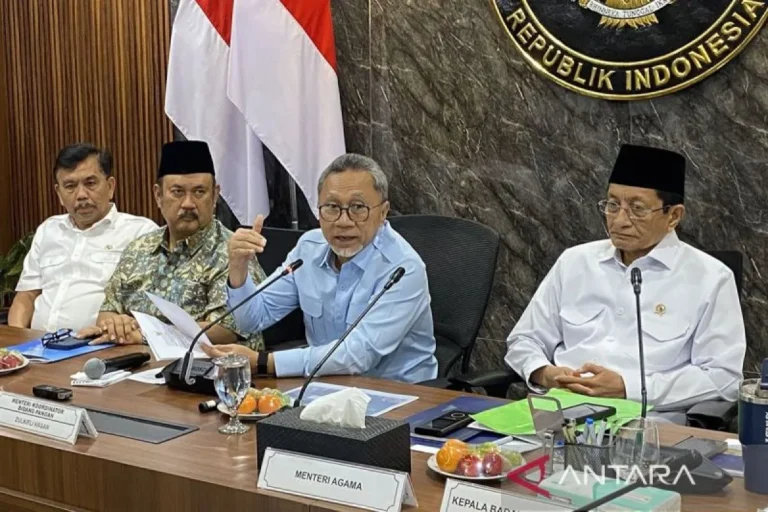
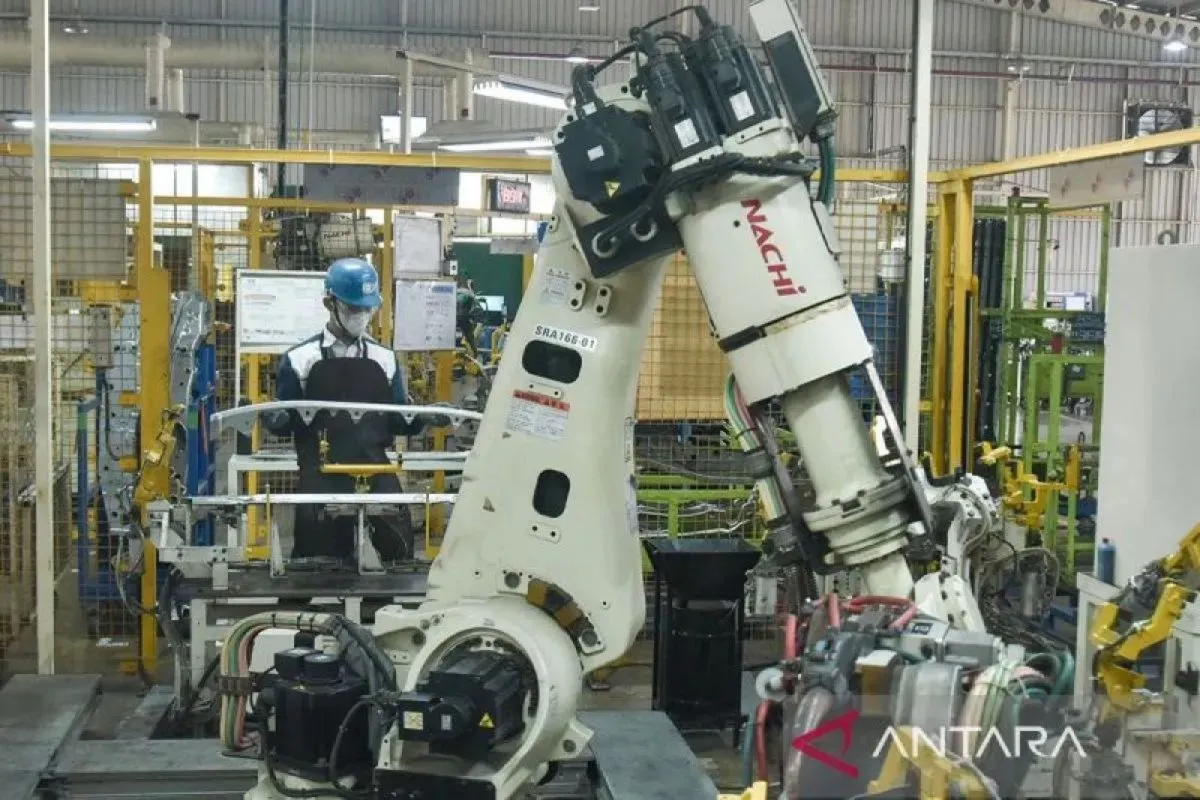
Jakarta (ANTARA) – Trade Minister Budi Santoso said the surge in capital goods, raw materials, and auxiliary imports reflects an expansion in Indonesia’s manufacturing sector.
He noted that imports in September 2026 were driven by capital goods, along with raw materials and auxiliary goods to support increased production and new orders within the domestic industry.
“This proves that the imports are productive and are the main driver behind the expansion of the domestic processing sector,” Santoso said in a statement in Jakarta on Wednesday.
Indonesia’s imports reached US$24.23 billion in September 2026, rising 5.09 percent from August and 18.41 percent from September 2025.
The increase was led by a 12.14 percent month-on-month rise in capital goods imports, followed by consumer goods, up 6.40 percent, and raw materials and auxiliary goods, up 3.12 percent.
The import growth coincided with an expansion in the national manufacturing sector. Indonesia’s manufacturing Purchasing Managers’ Index (PMI) rose from 49.8 in August 2026 to 52.4 in September.
From January to September 2026, Indonesia’s imports totaled US$210.63 billion, up 19.67 percent from US$176.01 billion in the same period last year.
Santoso said all import components recorded positive growth during the period. Raw materials and auxiliary goods imports posted the highest increase, at 21.11 percent, followed by capital goods at 16.49 percent and consumer goods at 15.54 percent.
During the first nine months of 2026, imports of aircraft and parts recorded the largest increase among non-oil and gas commodities, surging 241.60 percent.
Imports of salt, sulfur, stone, and cement rose 127.03 percent, while those of ores, slag, and ash increased 51.67 percent year-on-year.
China, Japan, and Australia remained the leading sources of Indonesia’s non-oil and gas imports from January to September 2026, together accounting for 52.94 percent, or US$94.27 billion.
France recorded the highest growth among non-oil and gas import source countries, at 122.95 percent, followed by Russia at 54.78 percent and Argentina at 52.09 percent.
Indonesia’s import growth reflects manufacturing expansion: Minister
Related Articles